Biomimicry in architecture: borrowing working principles from nature
Biomimicry in architecture means studying how a living organism solves a problem, such as keeping cool or moving without muscles, and turning that working principle into a building element. The aim is to borrow the function. A building that only looks like a leaf or a shell is usually called biomorphic.
How biomimicry differs from copying natural shapes
Copying a shape is easy and mostly decorative: a roof drawn like a wing, a column like a tree. Biomimicry in architecture starts from a job the building has to do, looks for an organism that already does it and works out the mechanism. The mechanism is what transfers, often in materials and at a scale that look nothing like the original.
Two routes are common. Problem-driven work starts with a building need, such as shading without motors, and searches biology for analogues. Solution-driven work starts from a biological discovery and asks where it could be useful.
What termite mounds really teach about ventilation
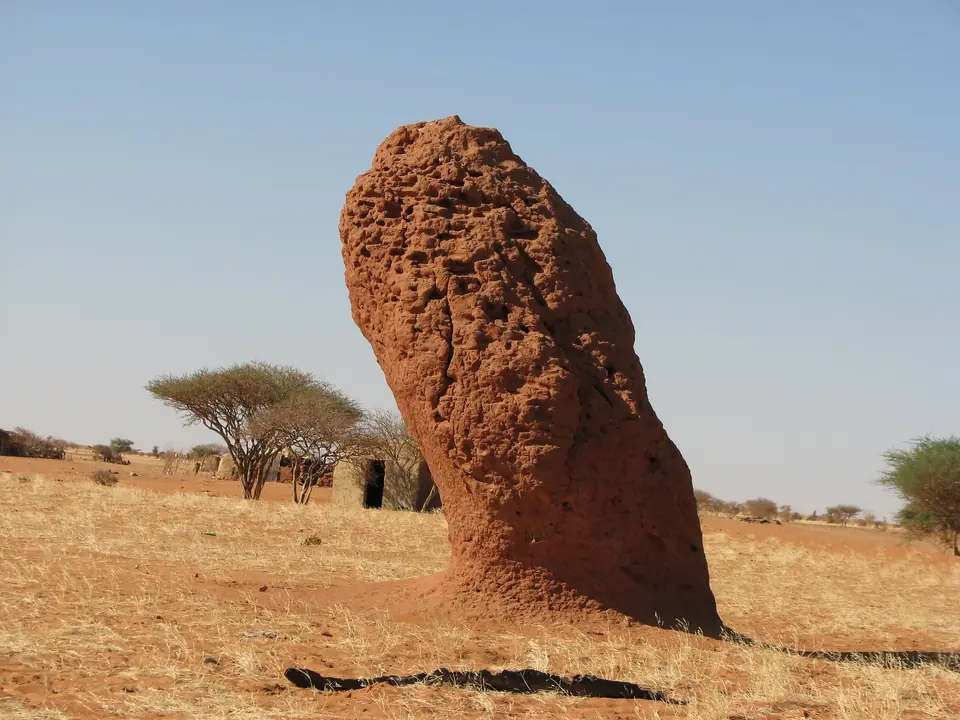
Termite mounds are the best-known example, and the story is often overstated. A widely cited office and shopping building in a highland African city is described as termite-inspired, yet its cooling relies on heavy thermal mass, fans that push cool night air through hollow floors and chimneys that let warm air out. Those are long-established methods where warm days follow cool nights.
Field measurements on mounds have since shown that the popular picture of a chimney drawing a steady draught is too simple. In mounds measured, air moves mainly with the daily cycle of heating and cooling, wind plays a smaller, disputed part, and the airflow serves gas exchange for the colony. What transfers to buildings is the use of daily temperature swings: a heavy mass flushed with cool night air absorbs heat the next day.
How pine cones and plants inspire moving facades
A pine cone opens when dry and closes when wet, even though its scales are dead tissue: the movement is purely physical. Each scale has two tissue layers whose cellulose fibrils lie at different angles; they swell by different amounts as they take up moisture, and the scale bends. Designers copy this with bilayers of thin wood veneer and a stable layer, which curl with humidity and need no motor.
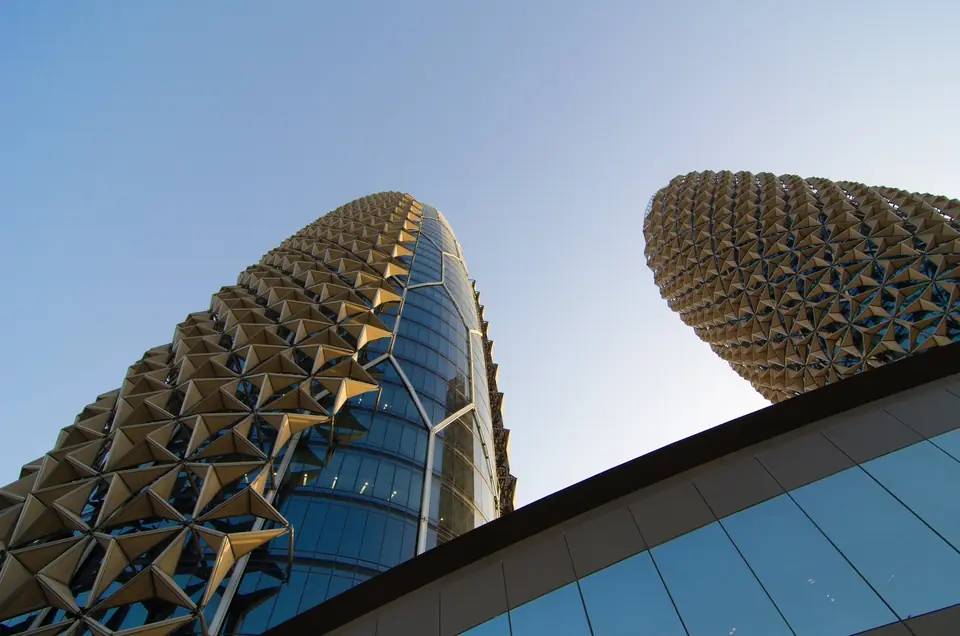
Leaves and flowers move in other ways. The leaflets of the sensitive plant fold at a touch as cells at their base lose water pressure. The bird-of-paradise flower, whose perch bends under a landing bird and folds its side flaps aside, has inspired hinge-free louvres in which bending a stiff rib folds a flexible fin. Such ideas feed into moving shading systems.
What honeycomb, shells and porous skins offer
Hexagonal cells divide a plane into equal areas with the least total wall length, so honeycomb uses little material for its size. As the core of a sandwich panel it also gives high stiffness for its weight: aluminium honeycomb between thin face sheets makes light cladding panels, and paper honeycomb fills many hollow internal doors.
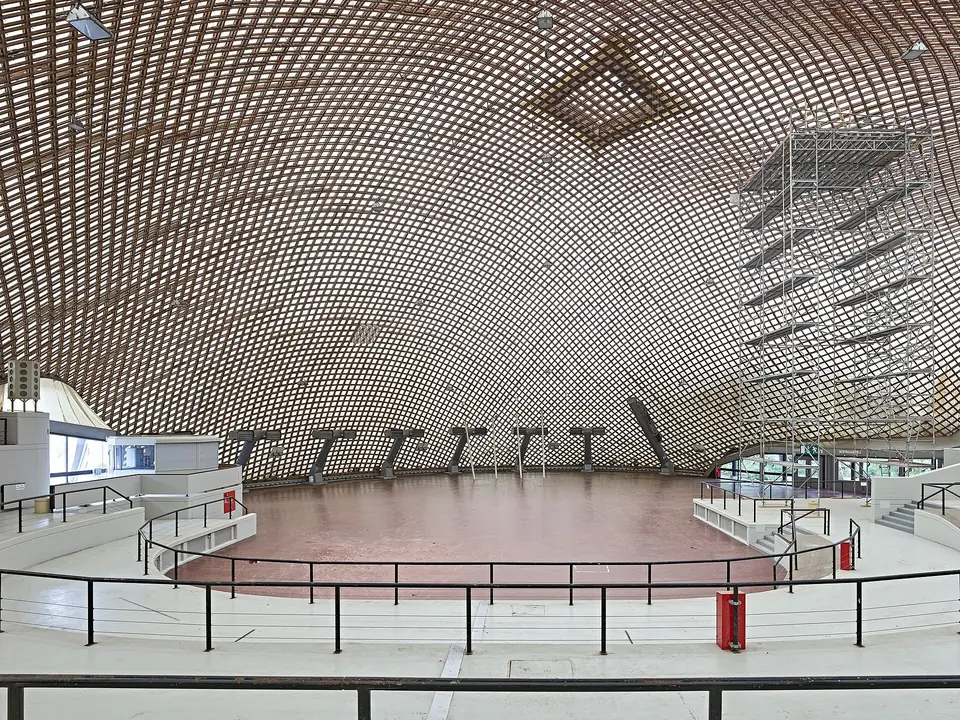
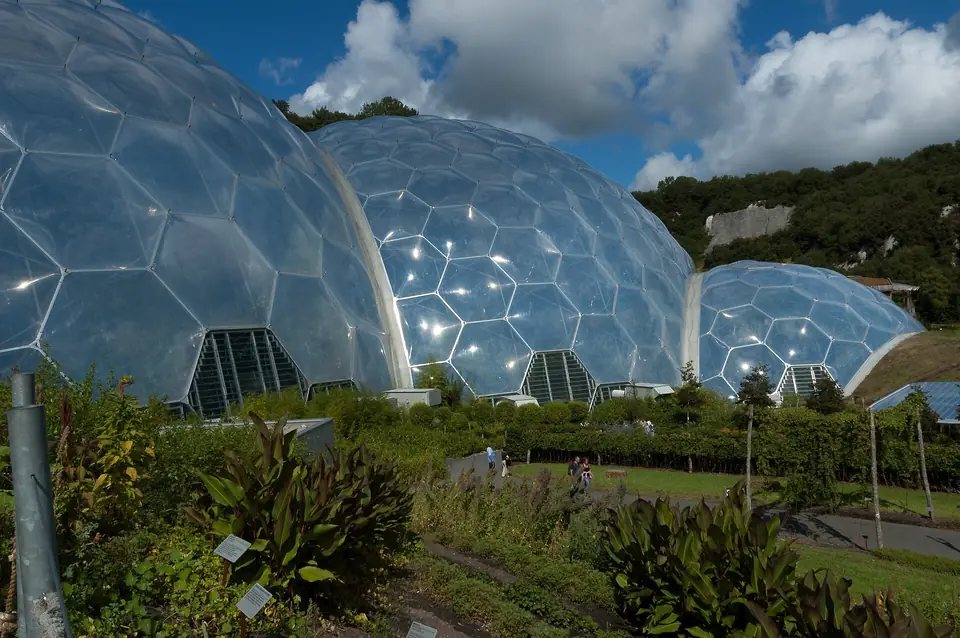
Shells such as eggs and sea urchin skeletons are strong because they curve in two directions, which lets loads travel through the surface mostly as compression. Bone adds material along paths of high stress and removes it elsewhere; topology optimisation in structural software produces similar branching forms.
Leaves exchange gas and water through pores that open and close. Perforated and folded outer skins borrow a looser version of the idea, letting air through while blocking direct sun, and suit ventilated facades in hot climates.
How a biological principle becomes a tested design
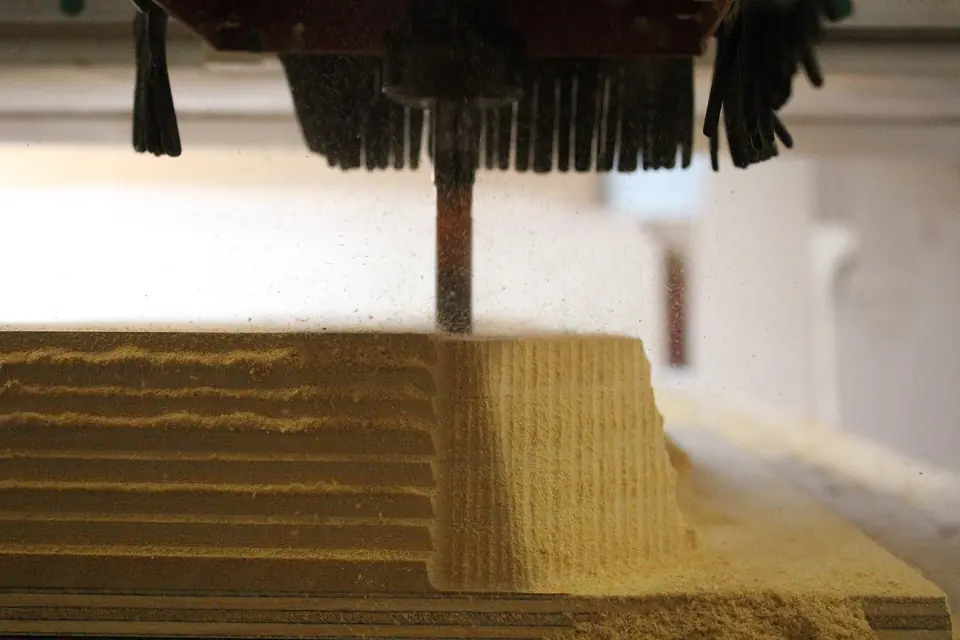
The translation runs through abstraction. The team states the function, describes the biological mechanism and reduces it to a principle that no longer depends on the organism, such as two bonded layers that swell differently. Only then are technical materials chosen. Climate chambers cycle prototypes between humidity and temperature extremes, while months of outdoor exposure reveal ultraviolet damage and fatigue. Because the geometry rarely repeats, prototypes are often made by robotic and CNC fabrication.
Worked exampleA humidity-driven canopy over a school courtyard
Hypothetical project. A school wants a canopy over part of its courtyard that closes when it rains and opens in dry weather, with no motors or wiring.
- 01
The function comes first: panels must lie flat and closed in damp air and curl open as the air dries, the same behaviour as a pine cone scale.
- 02
The principle is abstracted as two bonded layers that swell by different amounts, and the first panels pair thin veneer with a stable synthetic layer.
- 03
Prototypes are cycled in a climate chamber between dry and humid air while their curvature is measured. They react slowly, so a sudden shower wets the courtyard before they close; thinner layers would react faster but warp unevenly.
- 04
Outdoor samples grey and split along the bond line within a summer, so the design adds a protective coating and panels that can be swapped one at a time.
Where it falls short
- Biology works at small scales and repairs itself. A mechanism that works in a pine cone scale can fail at panel size, where weight, wind and fatigue take over.
- A passive material responds to one trigger. A humidity-driven panel responds to sun only by drying out, so it cannot replace a sun-controlled blind.
- Stories about organisms get simplified in retelling; check the biology at its source before using it to justify a design.
Key terms
- Biomorphism
- Using natural shapes for their appearance without borrowing how they work.
- Hygromorph
- A material or element that changes shape as its moisture content changes, such as a pine cone scale or a wood veneer bilayer.
- Bilayer
- Two bonded layers that expand by different amounts under the same change, so the element bends.
- Biological abstraction
- The step that reduces a biological mechanism to a principle independent of the organism, ready to be built in technical materials.
- Stomata
- Pores in plant leaves that open and close to control gas exchange and water loss.
- Honeycomb sandwich panel
- Two thin face sheets bonded to a hexagonal-cell core, giving high stiffness for little weight.
Questions
Is the termite-inspired building really cooled like a termite mound?
Only loosely. It uses thermal mass and night ventilation through fans and chimneys, which are long-established passive cooling methods. Research on mounds has since shown that they ventilate in a more complex way than the chimney picture suggests.
What is the difference between biomimicry and biophilic design?
Biomimicry borrows how organisms work to solve technical problems. Biophilic design brings nature into buildings, such as plants and views of greenery, for the comfort and well-being of occupants. A project can use both, and they answer different questions.
Do biomimetic facades need power?
Some do not. Humidity-responsive bilayers move by absorbing and releasing moisture, with no motors or sensors. Others use biology only as a model for geometry or control rules and still run on motors.