Double-skin facade: how the ventilated cavity works and where it fails
A double-skin facade is an outer wall of two layers, usually both glazed, separated by a cavity through which air moves. The cavity shelters sun shading from the weather and can be ventilated with outside air, room air or fans. It changes how heat, sound and smoke travel into the building and between its floors.
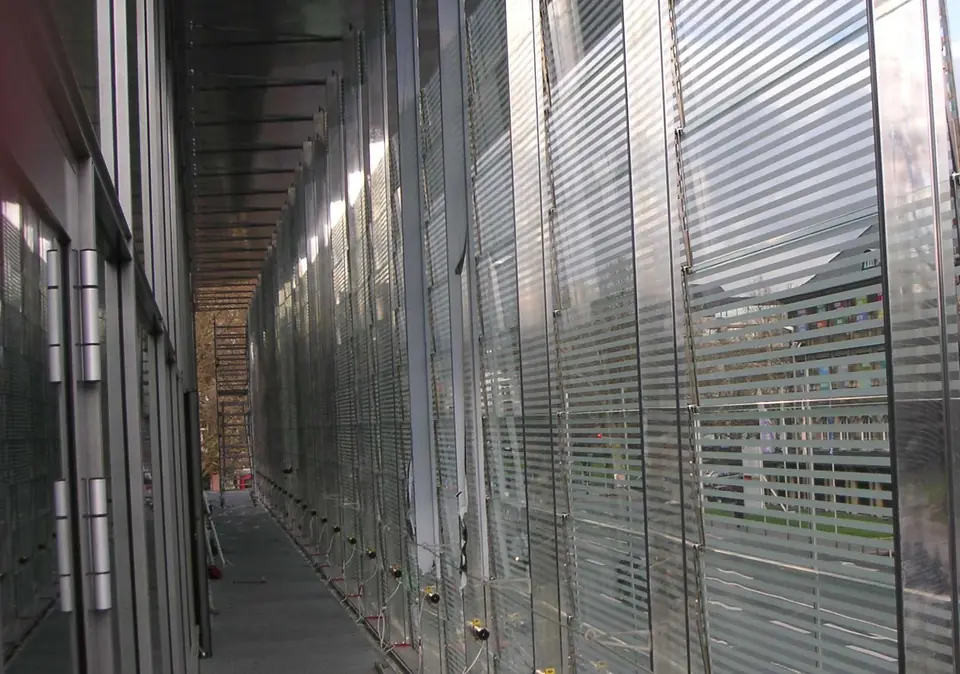
How the cavity of a double-skin facade works
The outer skin is often a single pane of toughened or laminated glass, and the inner skin insulating glazing. Blinds in the cavity are sheltered from wind, so they stay down in weather that would wreck external blinds. Air moving through the cavity carries much of the heat they absorb away from the room.
Air can come from outside and return outside, pass from the room into the cavity as exhaust, or enter from outside and supply the rooms, preheated in winter. Where outside air ventilates the cavity, the inner skin is built tighter than the outer one, so humid room air does not leak in and condense on the cold outer glass.
Types of double-skin facade
The four standard types, listed below, differ in how the cavity is divided. A tall, open cavity draws air strongly but also carries sound, smoke and heat between floors. In corridor facades the outlets of one floor and the inlets of the floor above are offset sideways, or stale air leaving one floor is drawn straight into the next.
- Box window: each window has its own cavity, closed off at every floor and bay.
- Shaft-box: box windows open into a vertical shaft that draws air up several floors by stack effect.
- Corridor: the cavity is divided at each floor but runs along it, often with a walkway.
- Multi-storey: the cavity runs undivided over several floors or the full height.
Stack effect and solar gain in the cavity
Warm air is lighter than cool air, so a heated cavity draws air in at the bottom and releases it at the top. The pull grows with the height of the cavity and with the temperature difference between cavity and outside, which is why shaft-box and multi-storey types move more air than box windows.
Glass lets short-wave sunlight through; the blinds and inner pane absorb it and give off long-wave heat, which glass largely blocks. If inlets are small or clogged, the cavity becomes a heat trap, and the top of a multi-storey cavity runs hottest. After handover, cavity sensors linked to a live model of the building show whether predictions held.
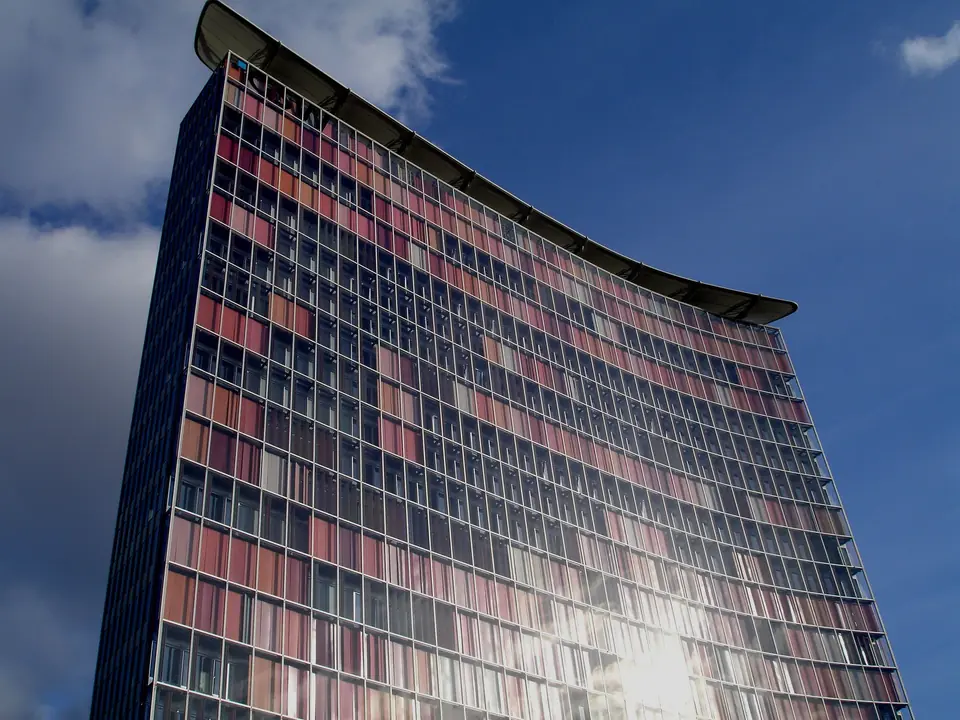
Why double-skin facades behave differently in hot climates
In cool climates the cavity earns its keep in winter as a buffer and a preheater for fresh air. In hot climates the outside air is already warm, so ventilating the cavity cools the blinds less, and the glass outer layer traps heat the building must remove. A fully glazed double-skin facade copied from a cool climate can raise cooling loads, which annual thermal simulation for the site reveals early.
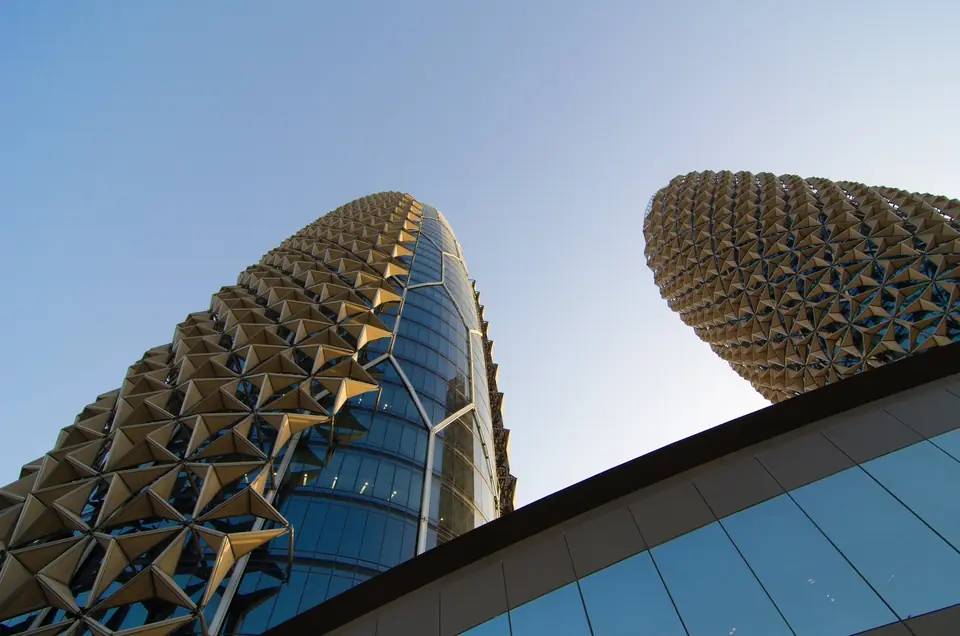
Designers in hot regions often swap the outer glass for perforated or folded screens of metal or precast concrete, which shade the inner skin and let air pass freely. Folds shade parts of the screen itself, and perforation size sets how much daylight and view get through for a given heat gain. Some screens draw on porous skins found in nature.
Maintenance and fire safety
A double skin has four glass faces to clean, plus blinds, grilles and insect mesh inside the cavity. Corridor types give walkways; narrow cavities need openable panes or panels removable from inside. Dust and insects collect at inlets, which need regular access.
Fire engineers treat the cavity as a possible route for smoke and flame between floors. Types divided at every floor already separate floors, provided the divisions are detailed as fire stops. Multi-storey cavities need a fire strategy, such as sprinklers or smoke vents, agreed early under local rules.
Worked exampleA double skin for a hot, dry city
Hypothetical project. A six-storey office with a long west facade is planned in a hot, dry climate with cool nights. The client wants a fully glazed double skin like those in cooler countries.
- 01
A first airflow model of a glazed multi-storey cavity shows the top-floor cavity far hotter than outside air on summer afternoons, and the fire engineer objects to smoke rising the full height.
- 02
The cavity is divided at every floor into a corridor facade with a walkway, and inlets and outlets are offset so exhaust is not drawn back in.
- 03
The outer glass is replaced by folded perforated aluminium panels that open the cavity to outside air and shade the inner skin.
- 04
Daylight simulation shows dim desks deep in the plan, so the upper part of each panel gets larger perforations to let light further in, while eye level stays denser against low afternoon sun.
- 05
The inner skin uses solar control glass with openable windows, opened on cool nights to flush heat out of exposed concrete slabs.
Where it falls short
- Cavity airflow is hard to predict. Simple models miss local hot spots and CFD covers only a few chosen hours, so measured performance can differ from the forecast.
- The extra layer adds cost, weight, cleaning and lost floor area, which simpler options such as external shading avoid.
- Sound travels between rooms through a shared cavity, which can undermine privacy between offices unless the cavity is divided.
Key terms
- Box window
- A double-skin type in which each window has its own cavity, divided at every floor and bay.
- Shaft-box facade
- Box windows connected to a vertical shaft that draws air up and out by stack effect.
- Corridor facade
- A double skin whose cavity is divided at each floor but continuous along it.
- Multi-storey facade
- A double skin whose cavity runs undivided across several floors or the full height of the building.
- Stack effect
- Air movement caused by warm air rising, drawing air in low and out high. It grows stronger with height and with the temperature difference.
Questions
Does a double-skin facade save energy?
It can, mainly in cool climates where the cavity preheats fresh air and shelters blinds that cut summer gains. In hot climates a glazed double skin can increase cooling demand unless the cavity is well ventilated and shaded. A simulation for the actual climate and orientation is the way to find out for a given project.
How wide is the cavity in a double-skin facade?
It ranges from narrow cavities that only hold blinds to corridors wide enough to walk along for cleaning. Width affects airflow, maintenance access and how much floor area the facade takes from the building.
What is the difference between a double-skin facade and a curtain wall?
A curtain wall is a non-loadbearing facade hung from the structure, usually a single layer of insulating glass in a frame. A double skin adds a second layer with a ventilated cavity between the two, and each layer may itself be built as a curtain wall.